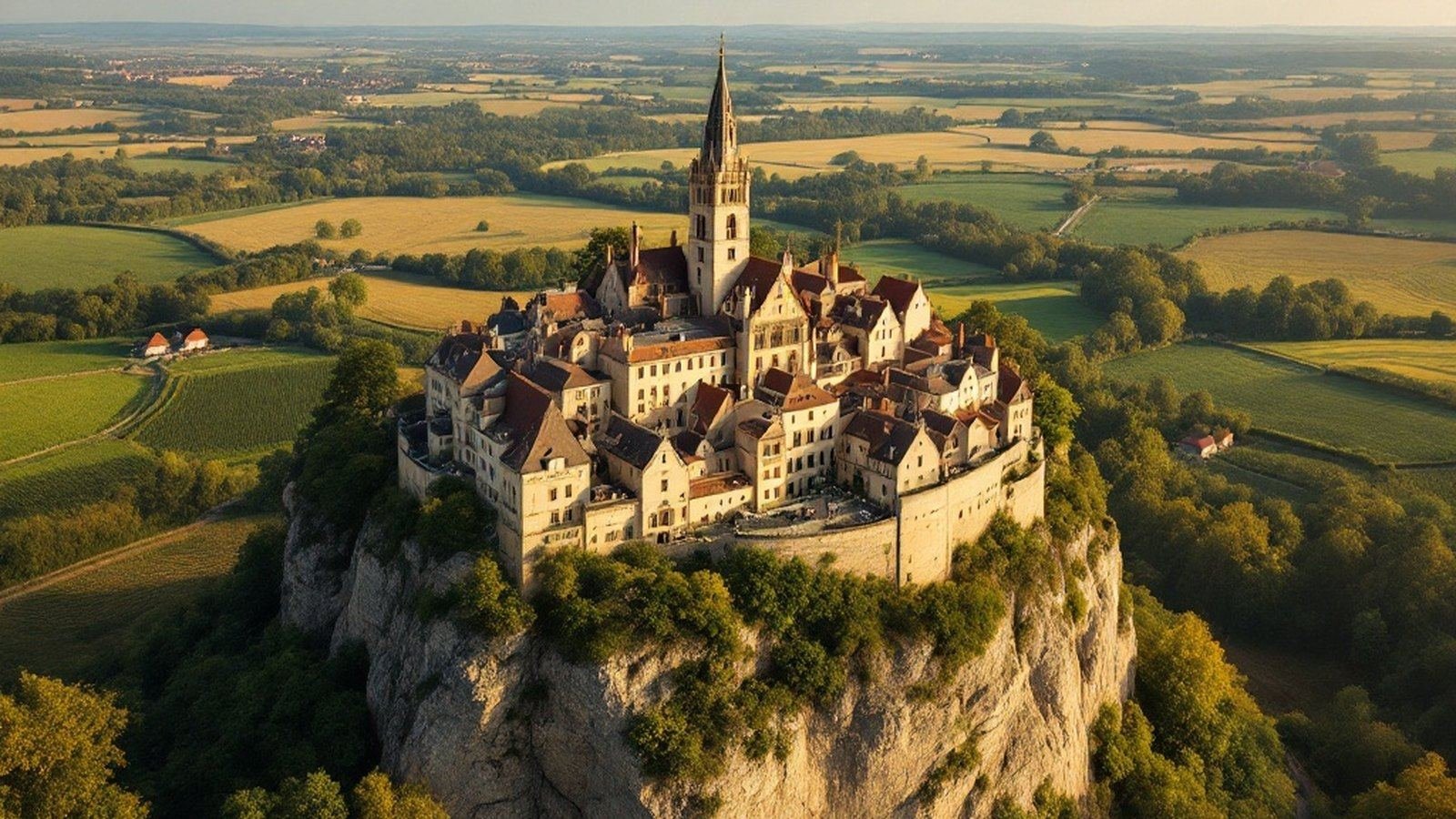
Domfront sits on its rock in the southern Orne, about as far from the autoroute mentality as Normandy gets. That is, of course, entirely the point — but it does mean that a little forward thinking transforms what might have been an awkward detour into the easiest sort of slow travel: unhurried arrival, unhurried stay.
01Getting Here
By car is by far the most practical option, and for a landscape of sunken lanes and scattered farm producers it is essentially the right tool anyway. From Caen, the D962 and surrounding routes bring you in around an hour and a half; from Cherbourg, allow a little over two hours. Crossing from England on the Portsmouth–Caen or Poole–Cherbourg ferries puts you in striking distance without a motorway slog — the Normandy countryside opens up almost immediately once you leave the port, and Domfront makes a very reasonable first or last night. From Paris, the A11 to Le Mans and then north through the Mayenne is the cleanest routing; count on roughly three hours from the capital.
By train, the nearest mainline station with good connections is Flers, about fifteen kilometres to the northeast, on the line from Paris Montparnasse via Argentan. Flers has a small but functional station and the journey from Paris runs to roughly two and a half hours with a change. From Flers to Domfront there is no direct rail link, so a taxi or a prearranged lift completes the journey — something worth factoring in if you are arriving without a car. Alençon, further east, is another option: slightly better connected by rail, with onward transfer by road.
From the ports, Domfront fits neatly into a broader Normandy itinerary: the D-Day beaches and Caen are to the north, the spa town of Bagnoles-de-l'Orne is just twenty or so kilometres to the east through the Andaines forest, and the whole southern bocage opens up around you once you are here. It rewards being a base rather than a day trip.
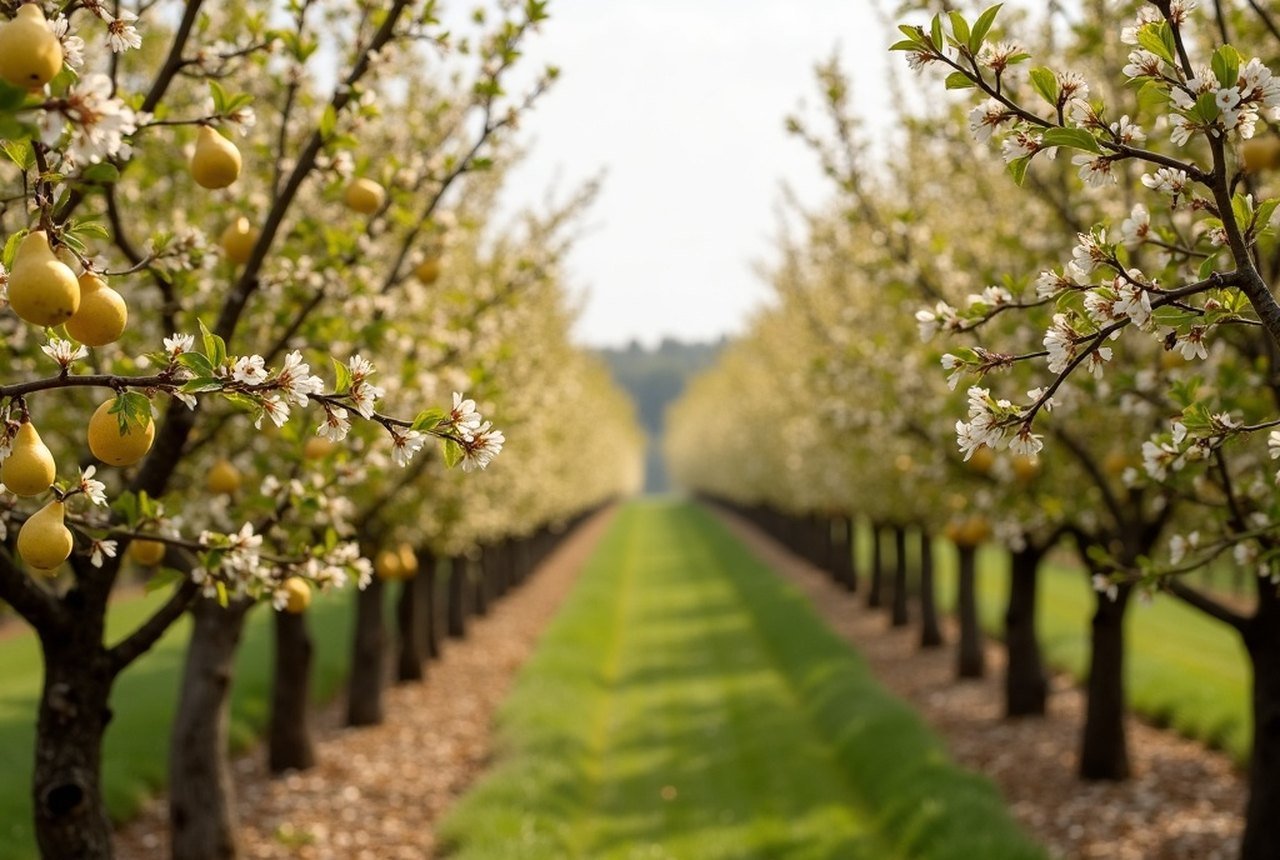
- Late March–Aprilpear and apple blossom in the Passais orchards
- October–Novemberperry-pear harvest season around Domfront
02When to Come
There is no bad time in Domfront, but there are distinctly different times. Spring brings the pear and apple blossom to the orchards of the Passais — typically from late March through April — and for a landscape defined by its trees, this is genuinely moving. The air is clear, the lanes quiet, and the light on the Varenne gorge is sharp and low.
Summer fills the town a little more: the café terraces on the Place du Commerce open fully, the rampart views are at their most vivid green, and the surrounding bocage is in full leaf. Weekends in July and August bring day visitors, but Domfront is never crowded in any way that diminishes it.
Autumn is the season that the town's whole identity is built on. The perry-pear harvest runs through October into November, the orchards turn gold and rust, and the producers around the Passais are at their most welcoming. If poiré de Domfront — the AOC pear perry that gives the town its modern name, Domfront-en-Poiraie — is any part of your reason for being here, come in autumn.
Winter is quiet, genuinely so, and the ruined keep and ramparts take on a particular atmosphere under low cloud. Some smaller establishments close or reduce hours between November and March, so check ahead; but the town is always there, and the view from the château is just as arresting in February frost.
03Where to Stay
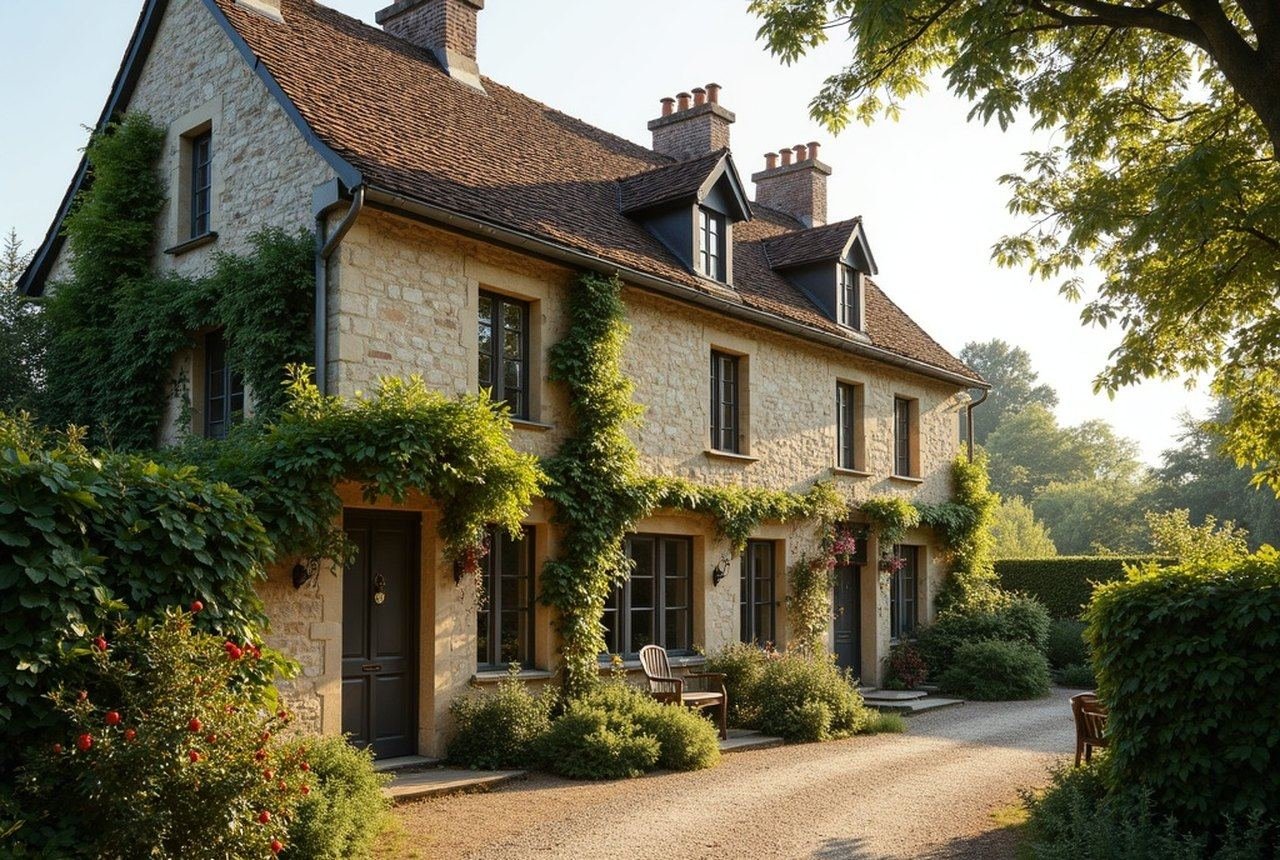
Domfront itself offers a handful of chambres d'hôtes within or just below the old town — staying on the rock, with the ramparts a short walk away and the view of the Varenne valley to hand, is the obvious choice for a first visit. Rooms tend to book up in the autumn harvest season, so earlier is better.
The wider Passais countryside holds a scattering of farmhouse B&Bs and gîtes, some of them working perry or cider properties, where the bocage landscape is as much part of the stay as the accommodation itself. These suit visitors who want to spend days walking the hedgerow lanes or visiting producers rather than circling the old town.
Bagnoles-de-l'Orne to the east has the broadest range of hotels in the area, from Belle Époque grandeur to simple logis, and works well as a base if you are combining both towns. For Domfront itself, though, the best rooms go to those who ask early and arrive unhurried.