01How to Read This Guide
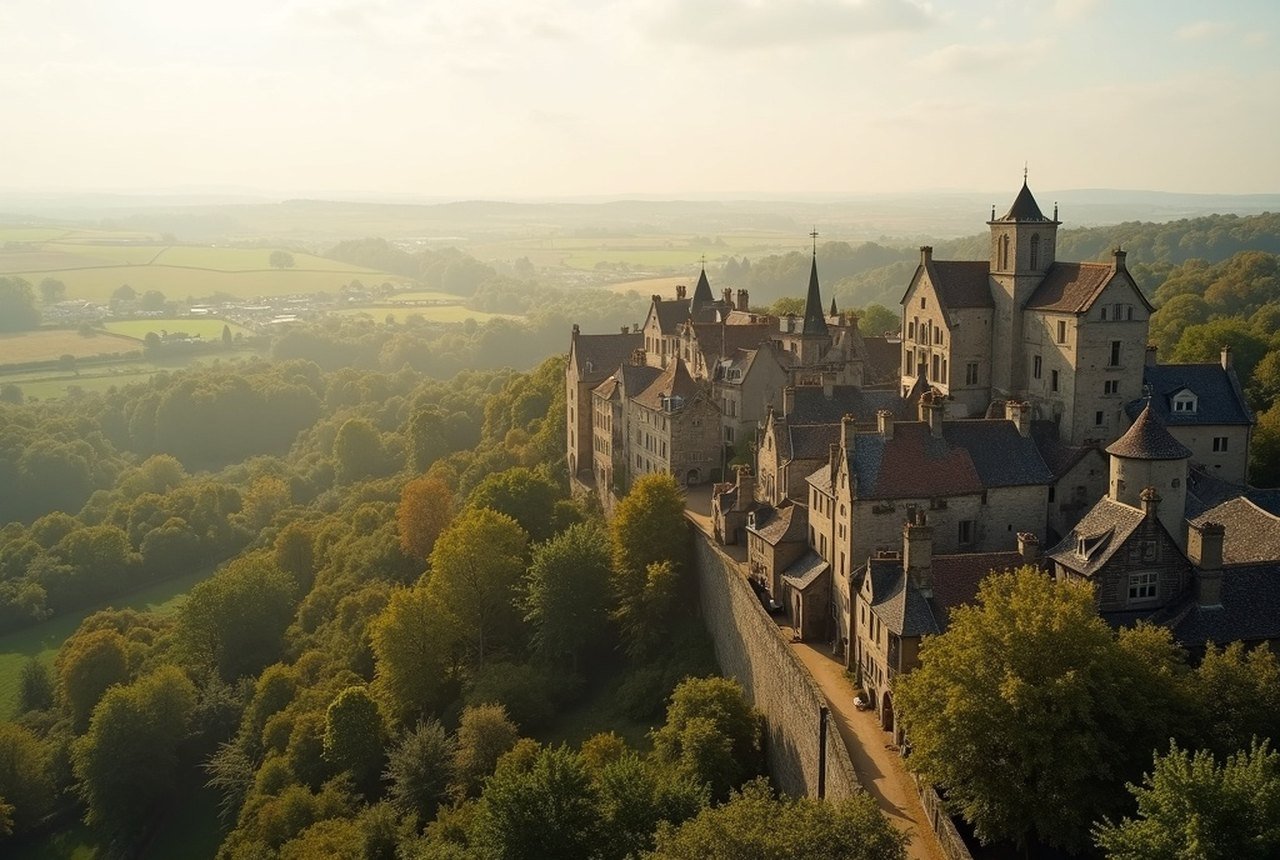
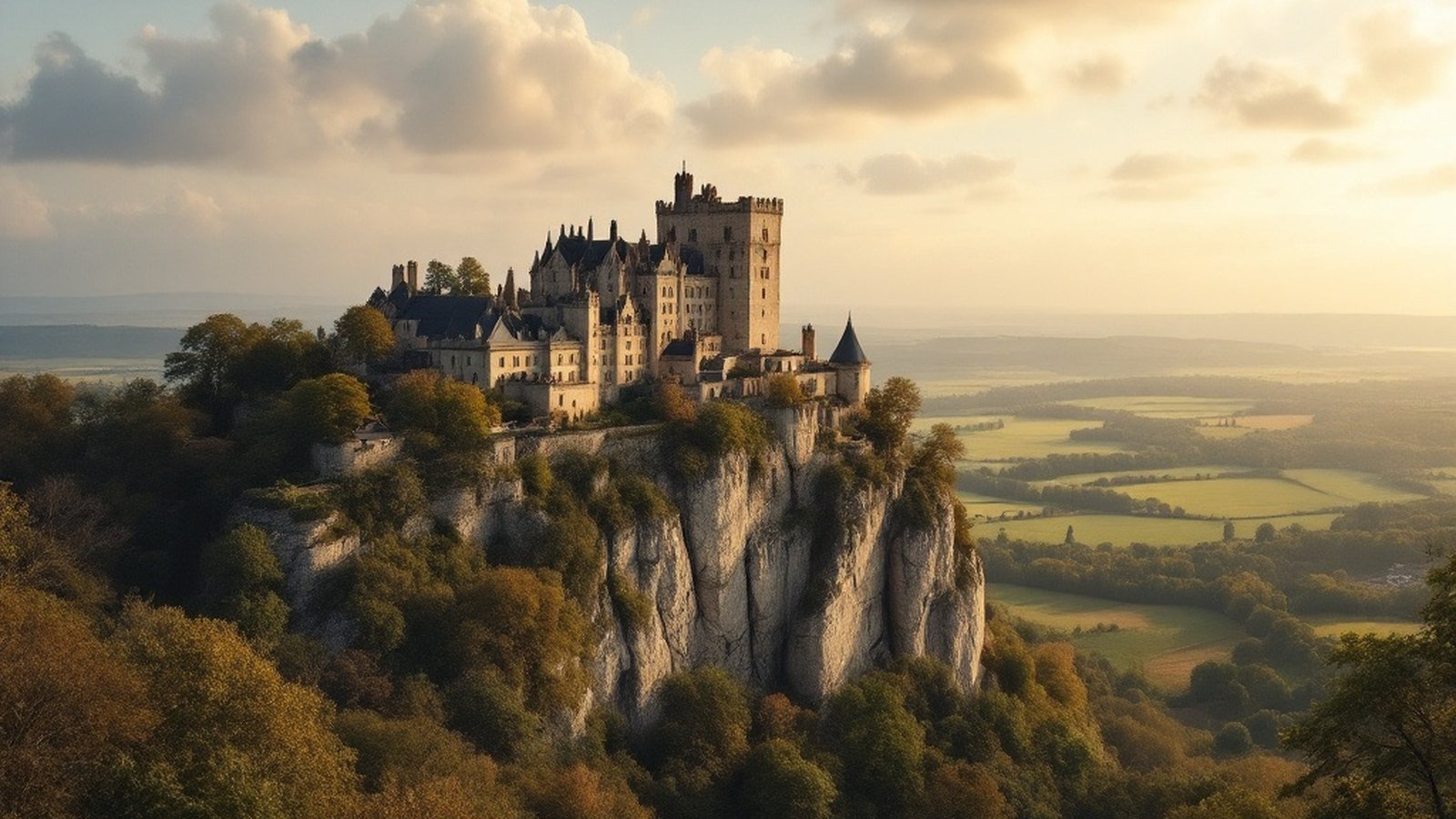
Domfront sits on a spine of granite above the Varenne valley, its medieval streets and château ruins balanced on the ridge like a crown no one has bothered to straighten. Below the rock, the river curves through wooded gorges; beyond that, in every direction, the Passais bocage unrolls — hedgerows, sunken lanes, perry-pear orchards enormous with age. That duality is the shape of things here: the perched town and the deep country, each making the other make sense.
This gazetteer tries to hold both in one hand. It is an index of places — not ranked by star rating or sorted by category, but named, located and briefly described, so that you can find what you are looking for and understand where it sits in relation to everything else. Château to the north end of the ridge. Notre-Dame-sur-l'Eau down the slope to the west, beside the river. The Place du Commerce at the heart of the old town. The outlying hamlets and producers scattered through the communes of what the maps now call Domfront-en-Poiraie — the name the commune took when several surrounding villages were folded in, a change that formalized what the landscape had always suggested: that the town and its country are one thing.
Use the gazetteer as a starting point, not a finish line. An entry will tell you what a place is and where it stands; the longer dedicated articles in this guide will tell you why it matters, what to look for when you get there, and what the walk between two places actually feels like underfoot. Each entry cross-references where relevant. Between them, they mean you need never arrive somewhere cold.
A word on scale. Domfront is small. The old town on its rock can be walked end to end in ten minutes; the wider commune is another matter — rural, unhurried, the kind of country where distances are quoted in road minutes rather than kilometres because the lanes meander. Everything in this gazetteer is reachable without a tour group or a fixed itinerary, which is precisely the point. Slow travel suits this place. The perry is not going anywhere, and neither is the view from the ramparts.
The entries that follow run alphabetically — the classic gazetteer convention, which has the pleasing effect of placing the château beside the cider route and the church beside the bocage, regardless of geography, so that the reader does the work of making connections. That work, in a town this layered, is half the pleasure.