01From Conquest to Ruin
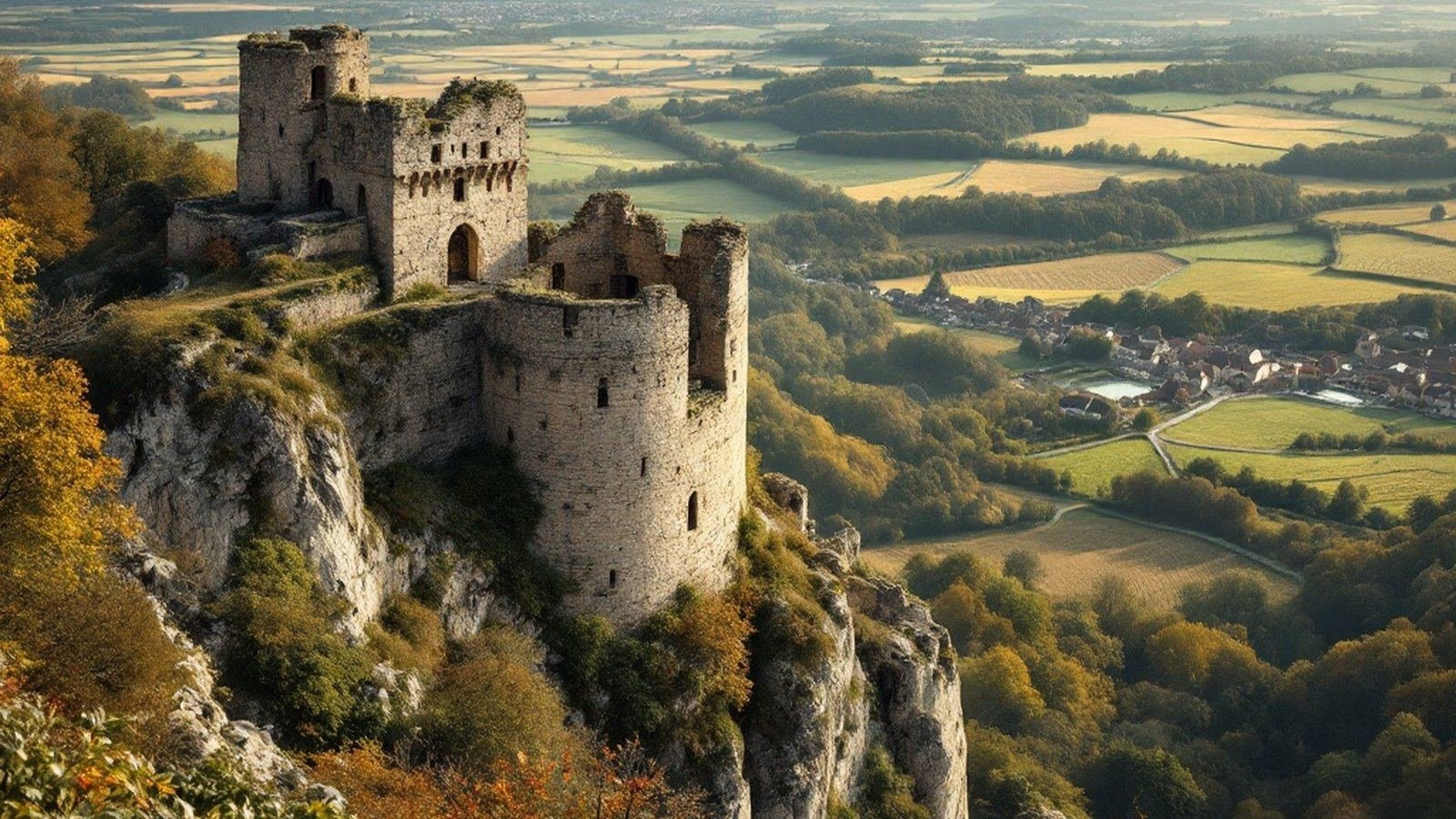
The rock on which Domfront sits is not a gentle hill. It is a granite spur, sheared on three sides, dropping sharply to the wooded gorge of the Varenne below. Whoever held that rock held the passage between Normandy and Maine, and for much of the medieval period, half of Europe's most powerful dynasties were trying to do exactly that.
A fortification was established here in the early eleventh century by the lords of Bellême, one of the most turbulent baronial families on the Norman frontier. What they built was modest by later standards, but the position was everything: a near-impregnable perch above a river crossing, controlling movement through the bocage. Within decades, the rock's strategic value had attracted far larger ambitions. William the Conqueror besieged and took the stronghold in 1051, absorbing it into the duchy. It would not be the last siege.
The château's great period came under the Plantagenets. Henry I of England held court here in the early twelfth century — this was a place of real political weight, not merely a garrison post. Henry II knew the fortress well, and it was from Domfront that he is recorded to have sent letters in the years surrounding the murder of Thomas Becket in 1170, a connection that has coloured the town's medieval reputation ever since. Eleanor of Aquitaine stayed within these walls. The castle was not a remote frontier outpost: it was, for a time, a working piece of the Plantagenet state.
The keep that visitors see today — a tall, ragged column of granite, open to the sky — dates substantially from the twelfth century, though it has been altered, damaged and stripped across the centuries that followed. The Hundred Years War brought further destruction; by the time the religious wars of the sixteenth century were done, the château had passed through too many hands and too many sieges to be easily reduced to a single architectural history. The crown ordered its partial demolition in the early seventeenth century, a practical measure to prevent rebel use of the stronghold — the standard fate of castles that had outlived their political usefulness to the crown.
- Early 11th centurylords of Bellême establish fortification on the granite spur
- 1051William the Conqueror takes the stronghold
- Early 12th centuryHenry I holds court at Domfront; keep substantially built
- 1170Henry II at Domfront around the time of the Becket affair
- Hundred Years Warfurther damage and contested occupation
- 1610sroyal order for partial demolition; castle loses strategic role
02The Best Balcony in the Bocage
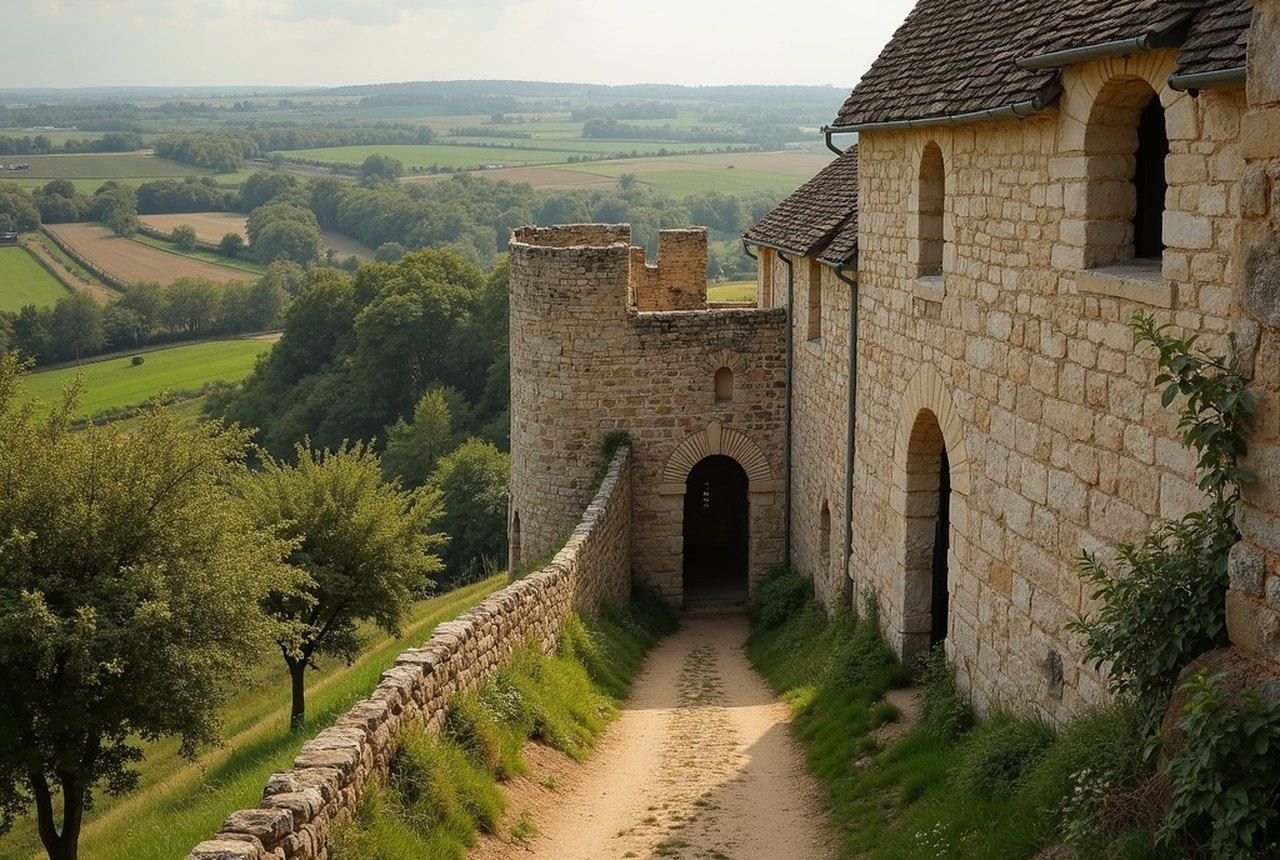
What remains is fragmentary but genuinely impressive, and the surrounding gardens and rampart walks have been laid out to make the most of what survived.
The ruins sit within a public park — free to enter, open year-round — and that openness is part of what makes the château so pleasant to spend time in. There are no queues, no audioguides competing for attention, no shop between you and the view.
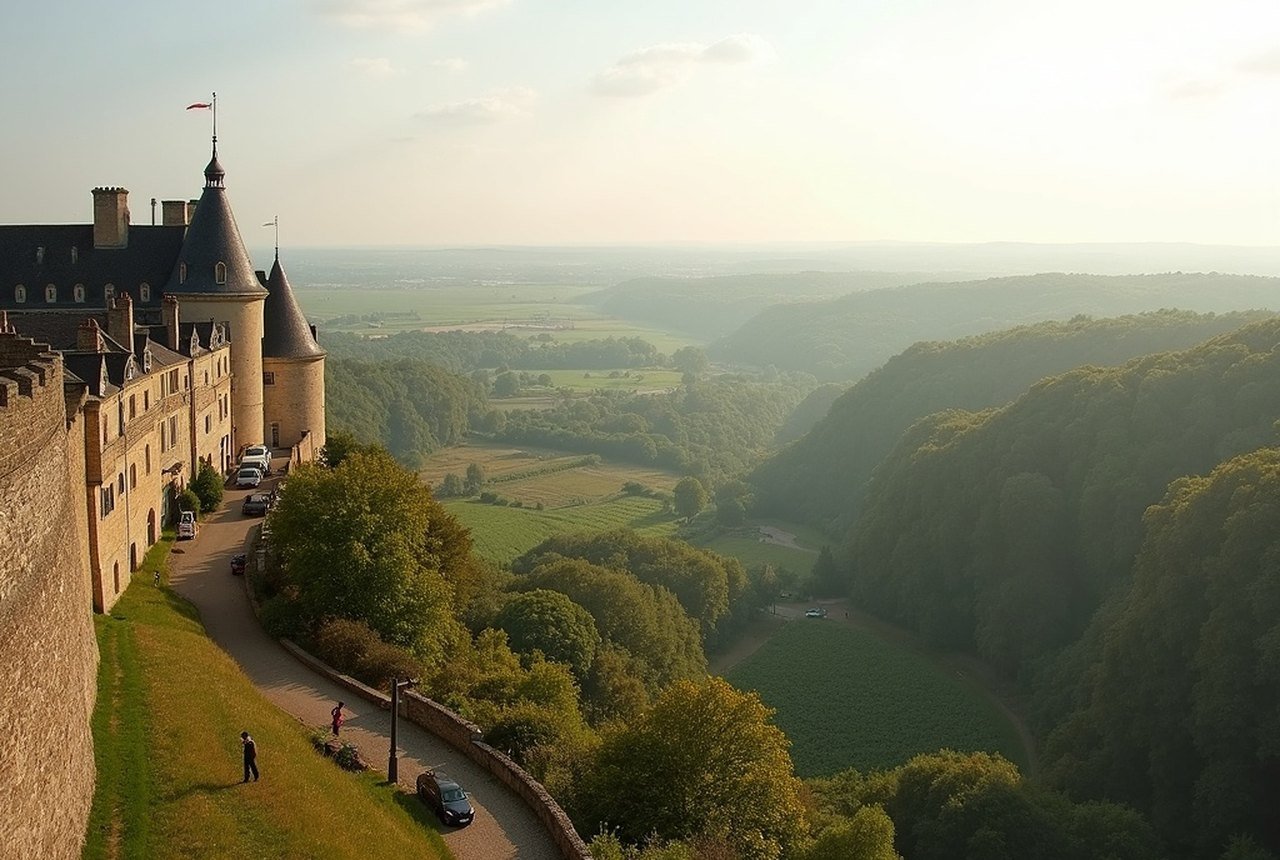
The panorama from the ramparts is the real reason most visitors climb the hill. To the south and west, the Varenne valley cuts through deep bocage — the hedgerow-threaded, orchard-rich landscape of the Passais that has shaped this part of Normandy for centuries. On a clear day the view extends far into the hills of the Orne and beyond. In spring, when the perry-pear orchards are in blossom, the countryside below takes on a quality that stops people mid-sentence.
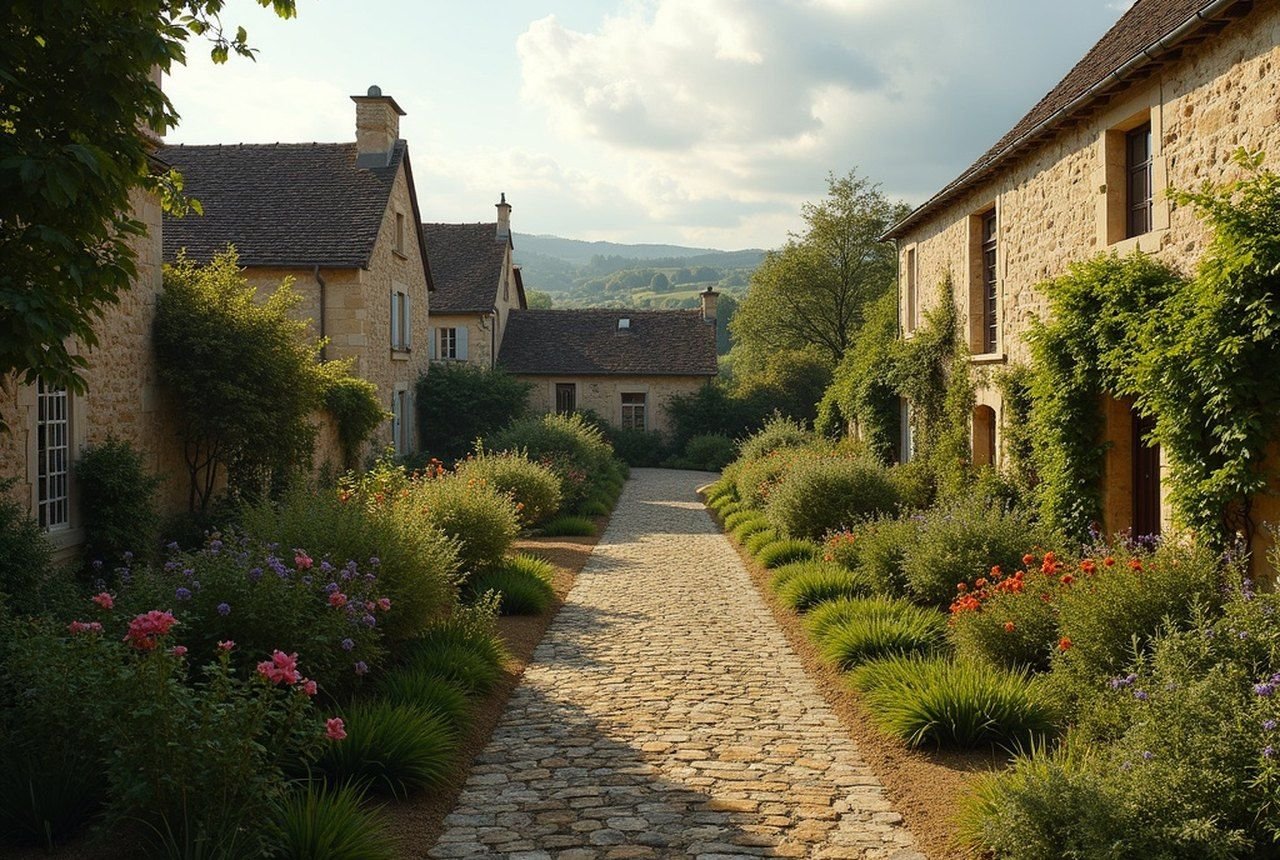
The keep itself can be viewed from the outside and partially explored at ground level; the interior is ruined open to the sky, its walls thick enough to remind you that this was built not for beauty but for survival. Interpretive panels around the site set the history in context without overwhelming the place with signage. The medieval gardens within the rampart enclosure add a gentler note — planted in a style that gestures at what a fortified garden of the period might have looked like, without making any over-earnest claim to reconstruction.
From the château gardens, a short walk along the ramparts leads down towards Notre-Dame-sur-l'Eau, the Romanesque church at the foot of the hill, which was itself standing when the castle above it was at the height of its power. The contrast between the ruined fortress and the intact church below is one of Domfront's most quietly eloquent juxtapositions — stone that endured and stone that did not, separated by a few minutes' walk and eight centuries of complicated history.