01Walking the rock
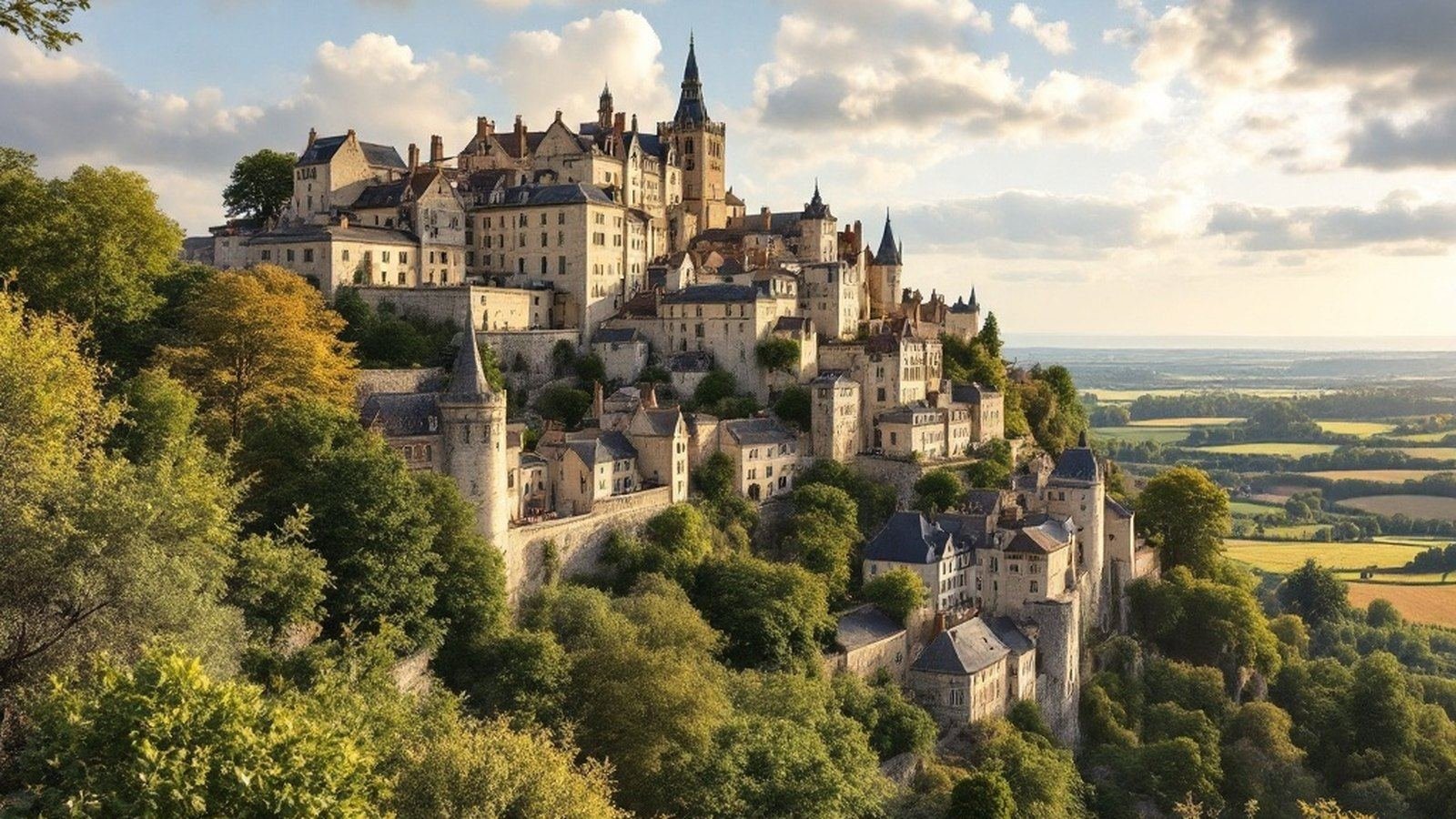
The medieval town occupies a long, narrow ridge — the kind of topography that shaped everything: the street plan, the sight lines, the character of the houses. Approach from below and the silhouette is already compelling, the old town stacked against the sky above a steep escarpment of grey rock and dark green scrub. Arrive on foot and the effort of the climb pays off the moment the lanes open into space.
The streets at the top are quiet and a little raw — granite walls, slate roofs, the occasional half-timbered façade tucked in among the stone. This is not a town that has been prettified for tourism. The medieval bones show through: narrow lanes that follow the line of old ramparts, sudden drops where a garden wall gives way to the valley below, corners that open without warning onto views that stretch across the bocage towards the hills of the Passais. In clear weather you see for miles. In low cloud the town feels like a promontory in the sea.
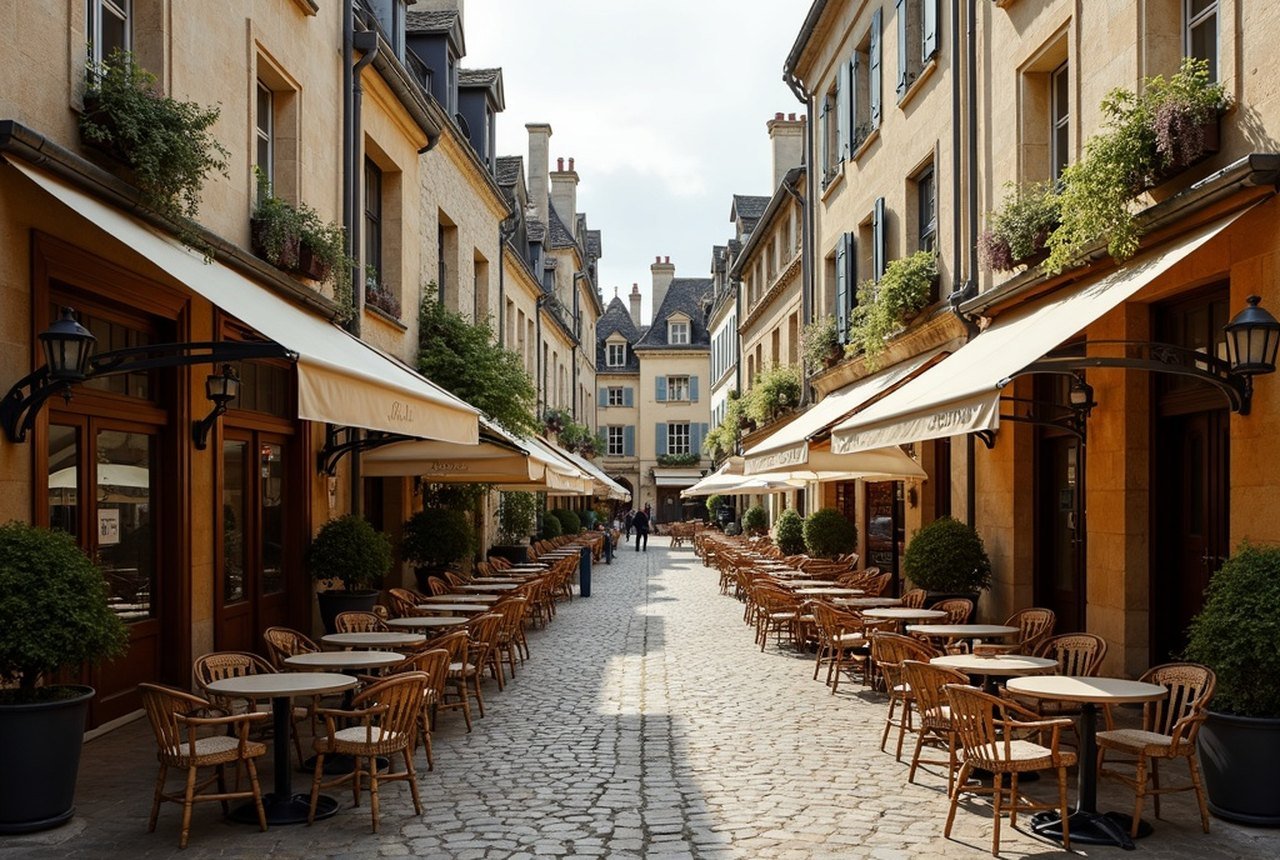
The Place du Commerce is the social and commercial centre — a modest square by any grand standard, but the right scale for a perched town of this size. The market has met here for centuries, and the café tables and modest shopfronts give it a lived-in ease that no amount of renovation could quite manufacture. It is the place to sit, collect yourself, and watch the town go about its day.
From the Place, lanes radiate in both directions along the ridge. To the west the promontory narrows towards the château ruins, where the ramparts and the keep survive above a sheer drop. To the east, the ridge opens slightly and the houses become more domestic, less fortified — gardens catching the sun, cats on walls, the smell of woodsmoke in autumn.
What gives the old town its particular character is the combination of enclosure and exposure. The lanes are tight and shaded; then a gap in the roofline, an archway, the edge of the escarpment — and suddenly the Varenne valley is below you and the horizon is enormous. The town was built to control this landscape, and it still does, at least visually. The granite that makes up the walls and the streets is the same granite that forms the rock beneath your feet. Nothing here has been imported. The place grew from its own ground.
Allow an unhurried hour or two to walk the full length of the ridge and back — though in a town this compact and this full of detours, the time has a way of lengthening pleasantly.