01A Church Below the Town
Most Norman churches stand where the town stands. Notre-Dame-sur-l'Eau does not. It sits at the bottom of the hill, beside the Varenne, almost as if the river claimed it before the town could. The reason is practical and a little melancholy: the church was here first, built in the eleventh and twelfth centuries when this valley-side position made perfect sense as a parish for the millers, tanners and river workers who lived below the fortified rock. The town that grew above it simply grew away.
What remains is one of the purest pieces of Romanesque architecture in the Orne. The plan was once a full cruciform church of five bays; in the nineteenth century, road-widening works removed four of those bays, slicing away a substantial portion of the nave. The amputation ought to have been fatal to the building's dignity. Somehow it was not. What survives — the remaining bay, the crossing, the choir and the apsidal chapels — holds its composure entirely. The proportions feel right, the stonework reads as a whole, and the semicircular arches carry the quiet authority that good Romanesque always does: nothing straining, nothing decorative for its own sake.
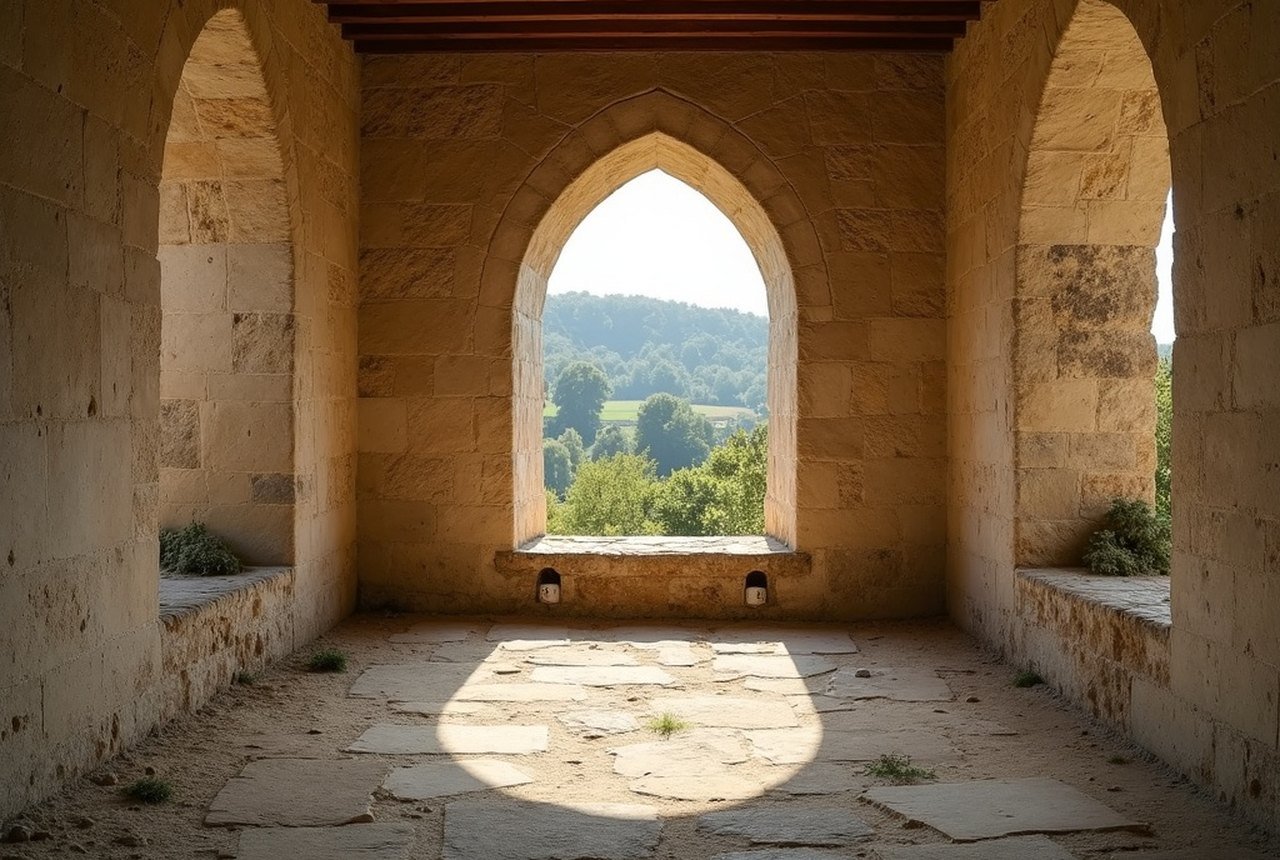
Inside, the light falls through small, round-headed windows and lands on bare limestone. There is little ornament, and that restraint is precisely the point. You are looking at building as it was understood in the century after the Conquest — rational, solid, and entirely sure of itself. A carved capital here and there is all the flourish the builders allowed.
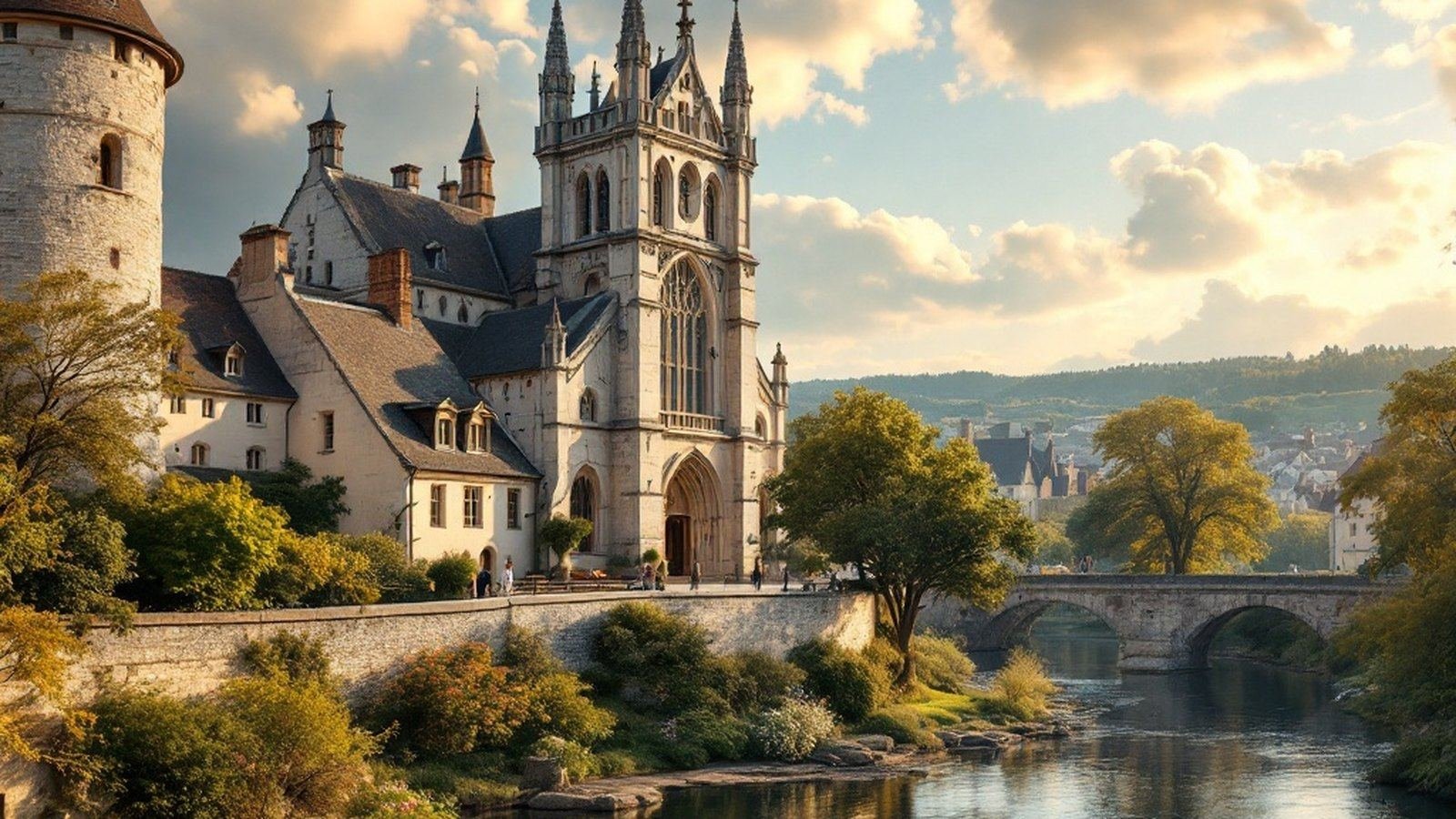
The setting amplifies everything. Willows and water, the slope of the hill rising behind, the old château ruins visible on the skyline above — Notre-Dame-sur-l'Eau sits in its landscape as though it grew there. Come in the morning, when the river light is still and the stone glows a warm, pale grey.
- 11th–12th centuryNotre-Dame-sur-l'Eau built
- 19th centuryroad-widening removes four bays of the nave