01Following the Fizz
The pear orchards of the Passais don't announce themselves with tasting-room signs or laminated menus. What you find instead, if you slow down enough, are long lanes between tall hedgerows, moss-sided barns, and farmyard gates where a hand-painted board and a modest welcome are the only advertisement. That quietness is the point. Poiré de Domfront — the AOC perry made predominantly from old perry pear varieties, chiefly plant de blanc grown in this particular slice of the Orne — is a drink that rewards patience, and so does finding it.
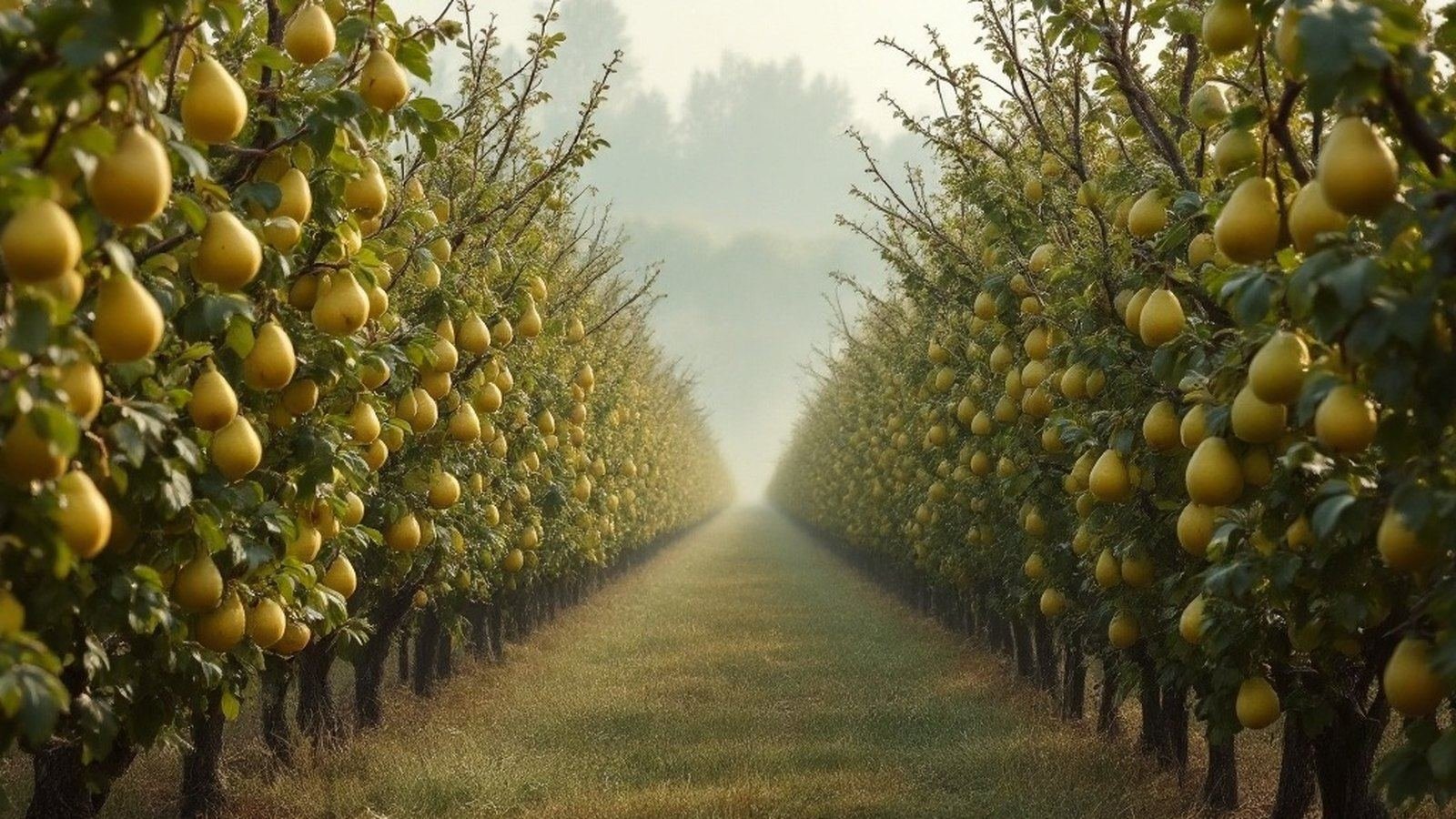
The AOC designation is strict: the pears must come from orchards within the defined Domfront zone, and the perry must be produced there too. The old trees are extraordinary — some many decades old, too tall to net, yielding when they choose. The juice that comes from them is dry, delicate and lightly effervescent, nothing like the sweet industrial perry sold elsewhere under borrowed names. To understand it properly, you need to taste it where it's made.
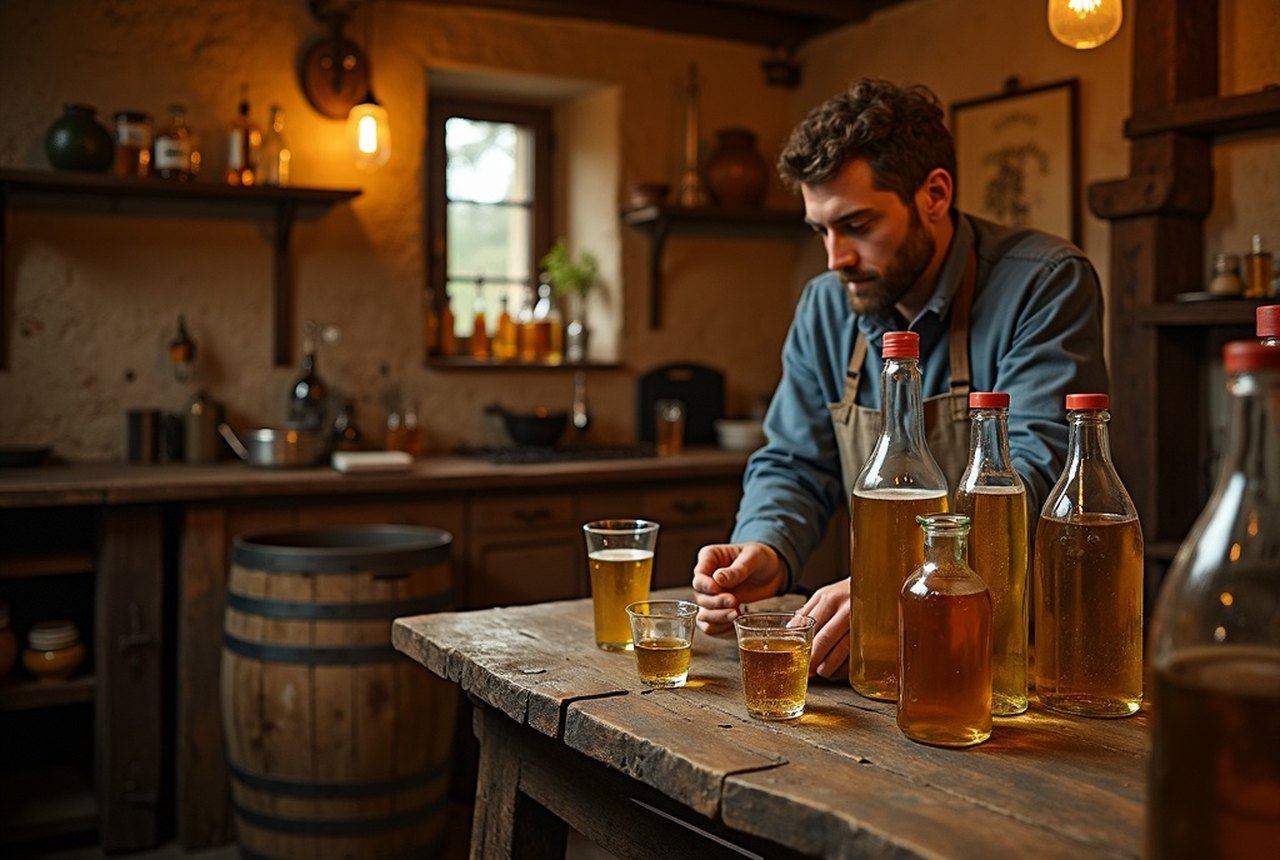
Several producers in the area open their cellars to visitors, at least by appointment, and a handful welcome passing callers during the pressing and bottling season in autumn and early winter. Ask at the tourist office in town for a current list — it changes year to year as family operations open and close to the public. The staff know who is pouring, and when.
The loose cider and perry route through the Passais winds south and west of the town through communes such as Loré, Lucé and Sept-Forges, among others — landscapes of deep bocage where the sunken lanes feel unchanged for centuries. A car is essential; distances are modest but the farms are scattered, and public transport doesn't reach them. If you plan to taste seriously at more than one domaine, take turns at the wheel or carry a cool bag and save the bottles for the evening.
Etiquette matters. These are working farms, not visitor centres. Ring ahead where a number is given, take your time at the gate, and buy something — even a single bottle — if you've been shown around. A producer who feels respected is a producer who keeps the door open. And the bottles you carry back reward the effort: poiré de Domfront opened at the dinner table, in its proper country, tastes unlike anything you'll find exported.
Cider makers operate alongside the perry producers in the same valleys. The wider Norman drinks tradition — from dry cider to Calvados to pommeau — is threaded through the country of hedgerows and orchards that surrounds the town.