01The Lay of the Land
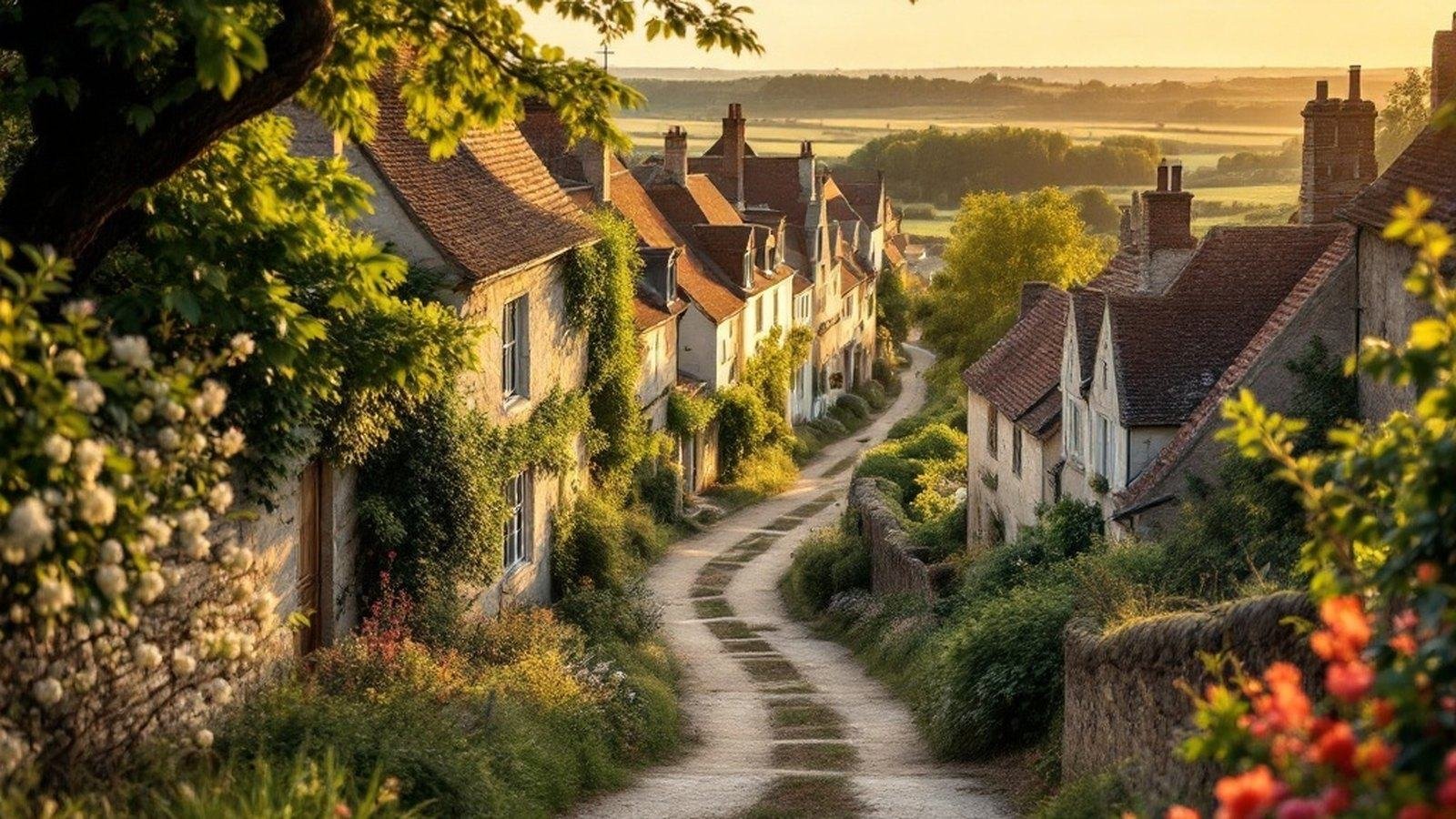
Domfront sits on its spine of rock like a punctuation mark in an otherwise gently rolling sentence. Below the ramparts, the ground drops away into the Passais — a pays within the southern Orne that has been shaped, over centuries, by the twin disciplines of the hedgerow and the orchard. This is bocage country in its most intact form: a living patchwork of small fields enclosed by earth banks topped with oak and hawthorn, threading between them a dense network of sunken lanes so narrow and so shaded that they can feel, in high summer, almost subterranean.
The word bocage describes both a landscape and a way of farming, and here the two are inseparable. The hedgerows — haies vives in French, literally living hedges — were never decorative. They held livestock, anchored thin hill soils, sheltered fruit trees from the Atlantic wind that rolls in off the Cotentin. Centuries of patient management produced the landscape you find today: one of the best-preserved examples of the Norman bocage anywhere in the region, and the habitat that makes the Passais's perry pears possible.
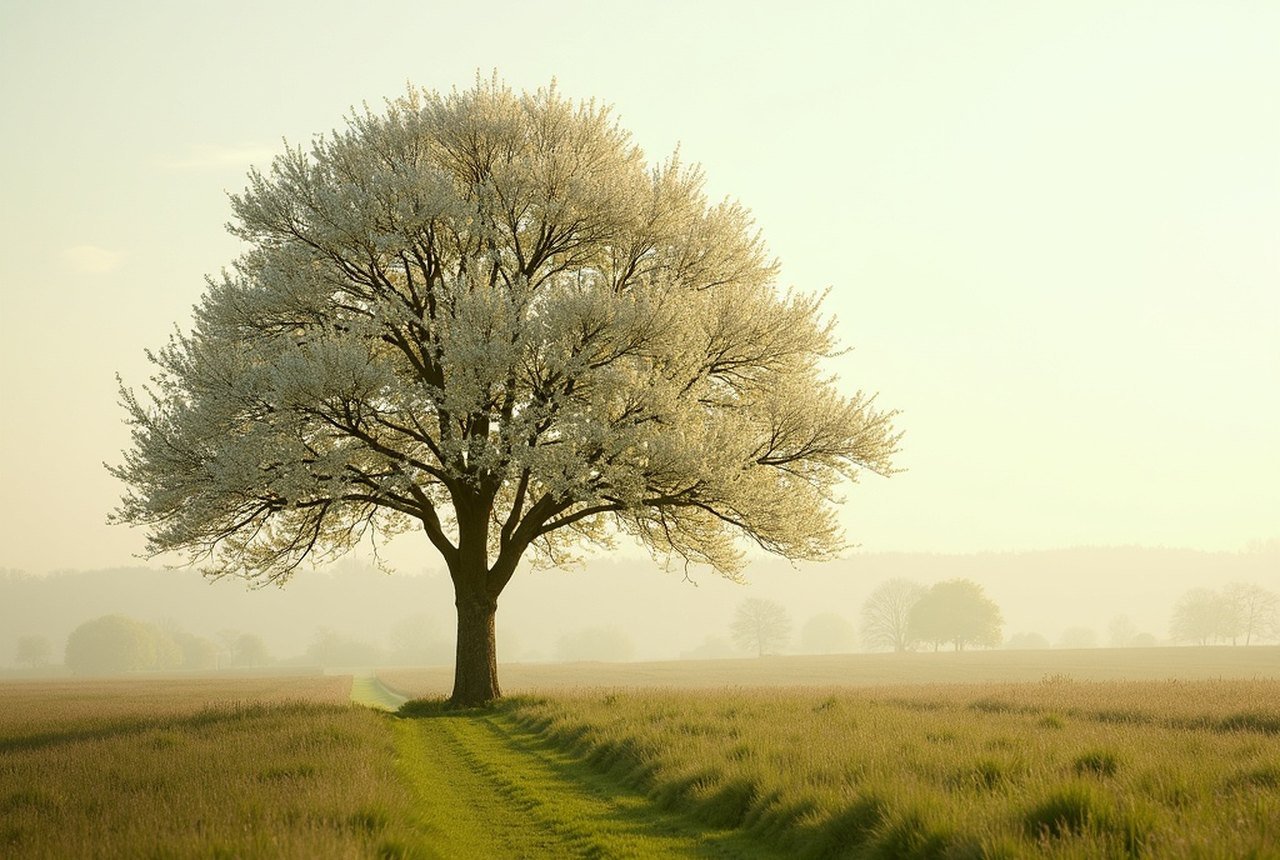
Those pears are the Passais's most distinctive product. The tall, gnarled trees standing alone in the meadows — planted in grass, never in tight rows — are the variety Domfront's AOC depends on, principally Plant de Blanc, whose fruit is unpleasantly astringent eaten raw but transforms, slowly fermented, into poiré de Domfront: a pale, faintly floral perry that carries the countryside in a glass. Spotting these trees is one of the pleasures of moving through the Passais on a quiet day. They are not like apple trees. They grow large and live long — sometimes over a century — and in blossom season, usually April, they turn white against the still-bare hedgerows with a drama that no itinerary can quite prepare you for.
02Getting into It
The Passais does not reward the car window. It rewards the slow pace — on foot or by bicycle — and the willingness to turn down an unsigned lane and see where it leads. Most of the chemins creux (sunken lanes) are perfectly rideable on a hybrid or touring bike; on foot, the network of marked trails that fans out from Domfront itself connects you to the countryside within minutes of leaving the old town gate.
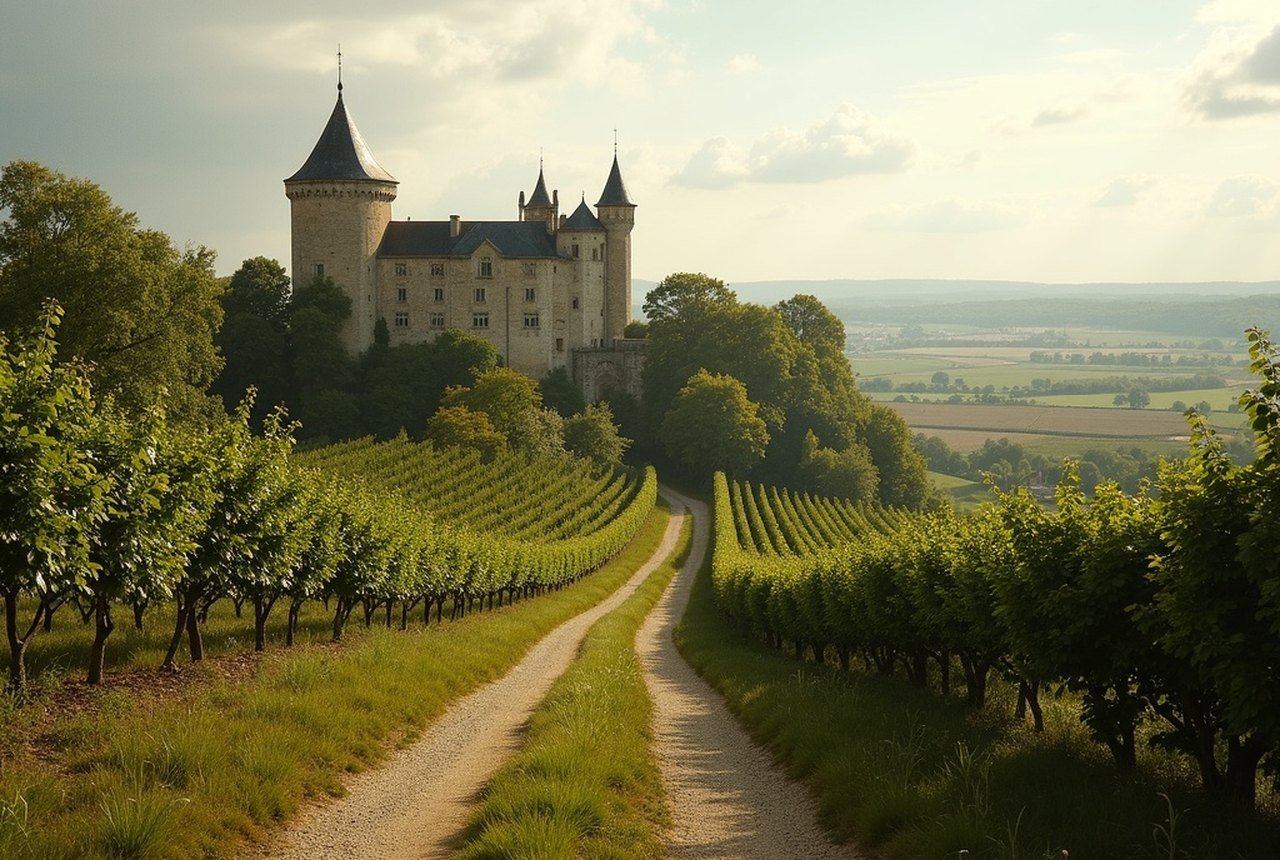
A good half-day route from the town follows the Varenne valley downstream before climbing back through the orchards above the western bank — a loop that takes in the gorge, the riverside meadows, and a return across open bocage with long views back to the château ruins on the skyline. The tourist office holds walking leaflets with the relevant trail markings. Longer, signed itineraries cross the whole Passais, connecting villages and farm hamlets barely touched by the twentieth century: places with a church, a lavoir and little else, which is precisely their appeal.
If you are cycling, the gentle gradients of the Passais make it genuinely manageable. The climbs are real — this is hill country — but short, and the payoff is invariably a downhill through dappled lanes so enclosed by growth that you can hear the birds before you see the sky. The roads carry almost no traffic outside market days.
03What to Notice, What to Taste
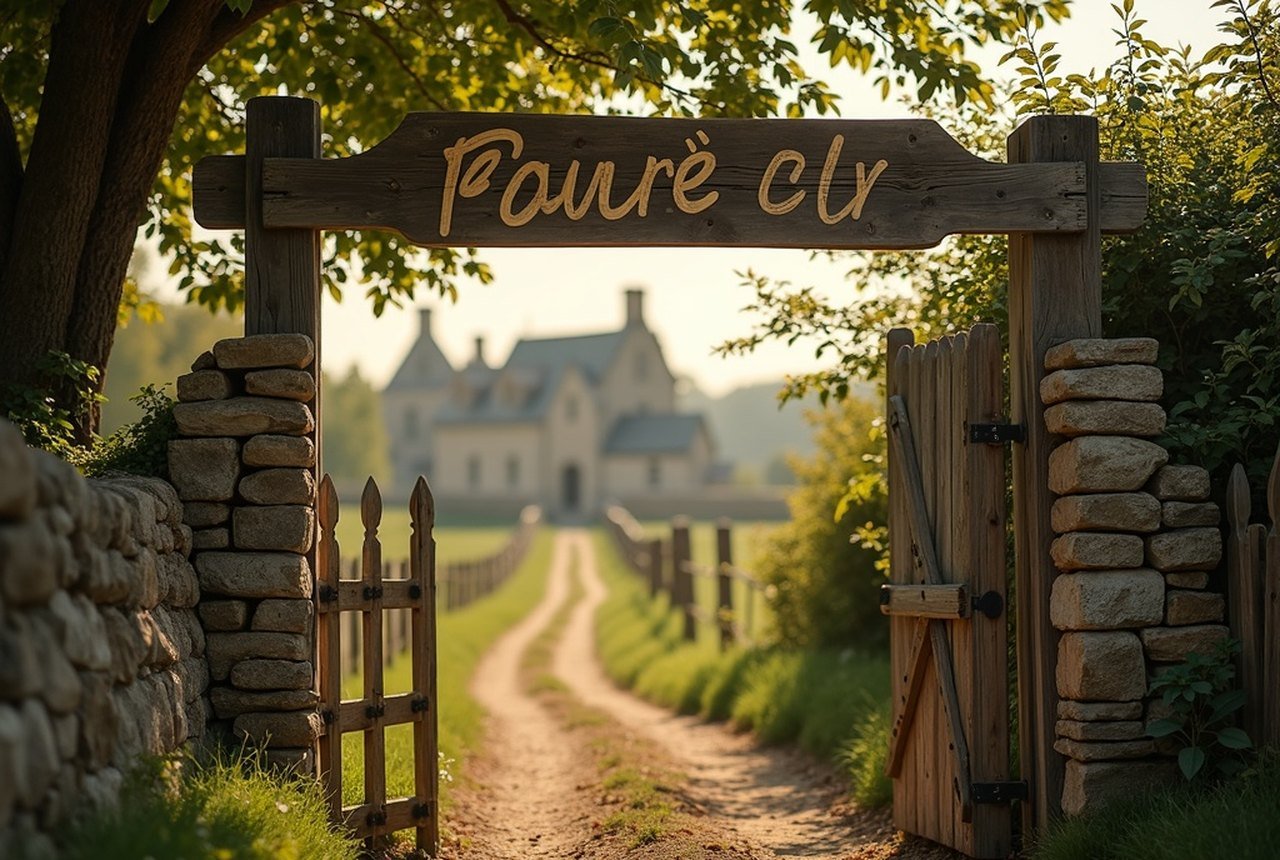
Go slowly enough and the bocage gives itself up in detail: the bark patterns of century-old perry-pear trunks; the way light falls through a hawthorn bank onto a muddy track; a farmstead with barrels stacked under an open barn and a hand-lettered sign for poiré at the gate. Many producers in the Passais still sell direct from the farm — not always with fixed hours, and not always with English spoken, but always worth the knock. Take a cool bag.
Markets bring the countryside into town. Domfront has its weekly market, and it draws in the Passais — farm butter, raw-milk cheeses, andouille from Vire, garden vegetables, and bottles of perry and cider that cost a fraction of what they would in a city. That transaction — farmer to visitor, direct — is as much a part of understanding the Passais as any trail map.
The temptation, arriving in Domfront, is to spend all your time on the rock: the château ruins, the old town's granite lanes, the views. Resist it, at least for a morning. The countryside below is not a backdrop to the town. It is the reason the town is there at all — the orchards and the farms and the sunken lanes that fed and sheltered and made it. Walk down into it and the whole place makes a different kind of sense.