01Beyond the Hill
Domfront sits close to one of the quieter corners of Normandy, and the country around it rewards a day's exploration in any direction. None of these trips demands a motorway; they belong to the same unhurried world as the town itself.
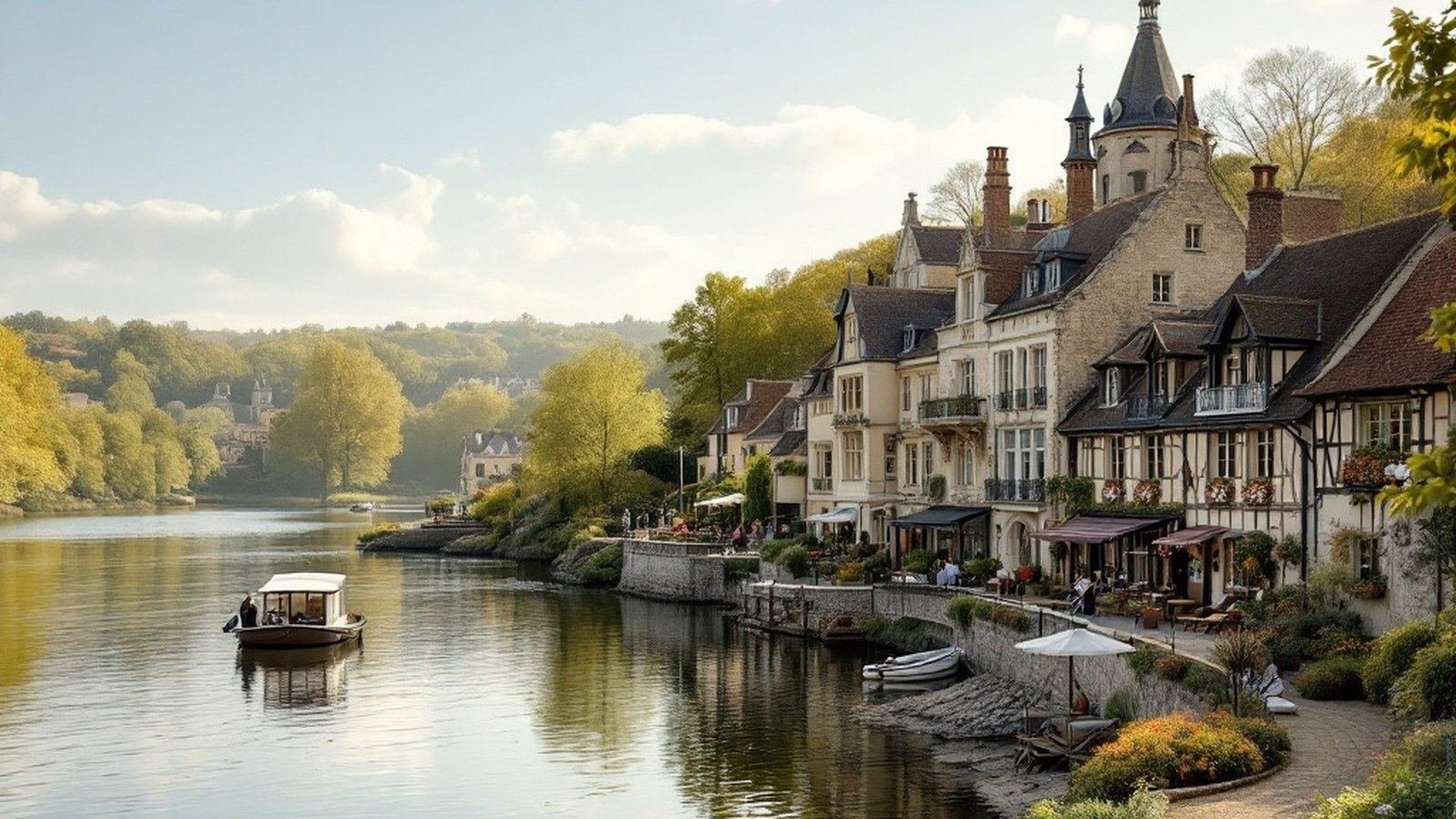
The obvious first excursion is Bagnoles-de-l'Orne, roughly twenty kilometres to the east, tucked into the Forêt des Andaines. It is Norman Normandy's only spa town, and its Belle Époque lakeside quarter — casino, grand villas, flowering promenades — feels improbably glamorous for this deep-rural corner of the Orne. The thermal baths have been drawing visitors since the nineteenth century. Even without taking the waters, the forest walks and the horseshoe of the lake make it worth an afternoon; the town's architecture alone is a mild, pleasurable surprise.
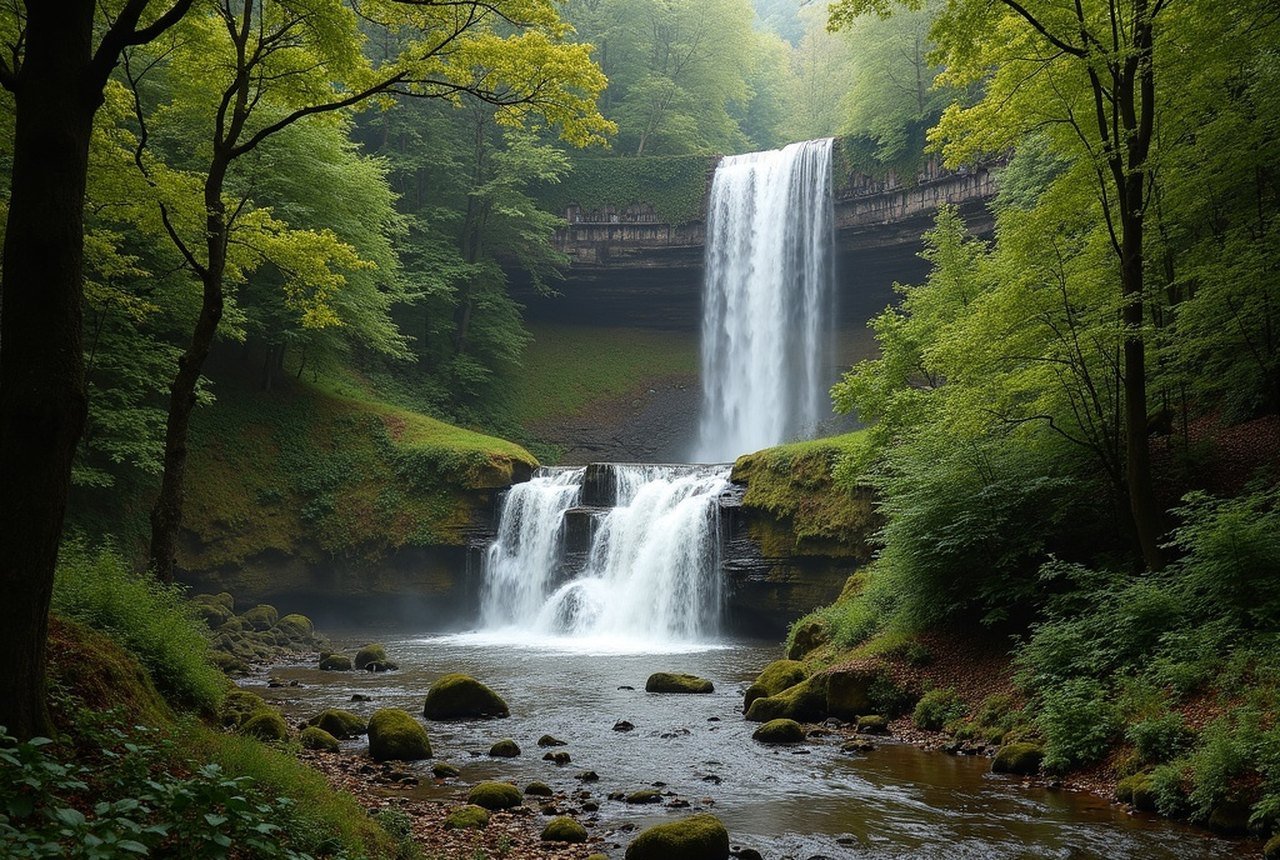
Heading west into the Manche, Mortain offers something rawer. The town stands on a granite bluff, and the valley below it carries the Cance and Cançon rivers through two sets of waterfalls — the Grande Cascade and the Petite Cascade — reached by short paths through mixed woodland. The Abbaye Blanche, a twelfth-century Cistercian foundation just outside the town, adds monastic weight to a visit. Mortain also has a particular Second World War significance: it was the site of a major German counter-offensive in August 1944, and the hilltop chapel of Saint-Michel carries long views across the fighting country.
Further afield, the bocage deepens into the Sée and Sélune valleys, and the market town of Vire — across the departmental border into Calvados — gives its name to the andouille de Vire, the charcuterie that turns up on local menus. It is a working Norman town, not a tourist set piece, but that is rather the point.
A car is essential for all of these; the roads are quiet and the driving, through hedgerow and orchard country, is part of the pleasure.
- 12th centuryAbbaye Blanche founded outside Mortain
- August 1944German counter-offensive at Mortain during the Normandy campaign